There has been little time for words over these several years..
Stunned silence has descended …
but some how I feel like playing #inktober2019.
I did the assignment as deadline and post it complete..




There has been little time for words over these several years..
Stunned silence has descended …
but some how I feel like playing #inktober2019.
I did the assignment as deadline and post it complete..
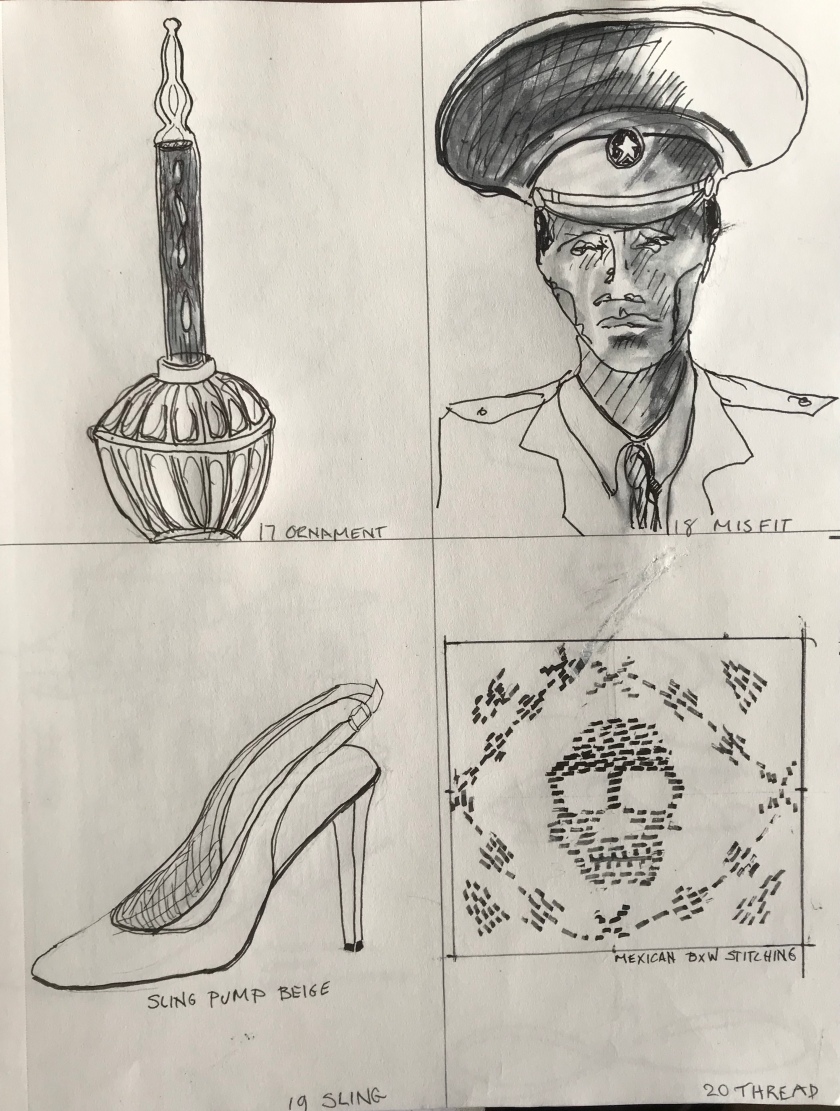
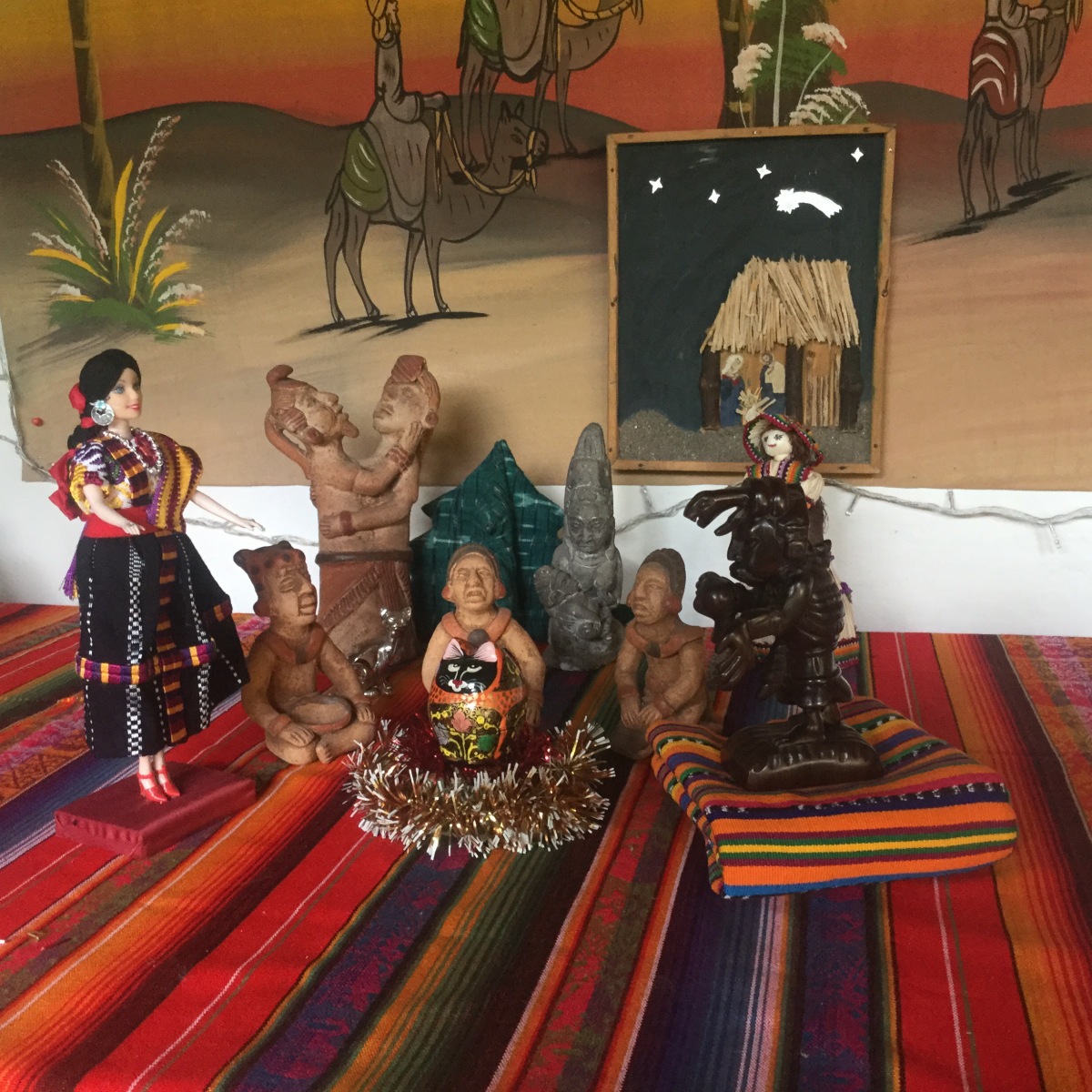
 Wise woman from Xela moves on up in her Red shoes to be Virgin.Mother. medicine God makes a fine Joseph and cat lovers promoted their candidate
 In this version a Peruvian gourd plays Joseph and Corn Lady stars as The Virgin Baby Jesus is Jade
 Although the beige Baby is eye catching..collaborators jockeyed for a more subdued version
#PIZZAGATE is a profane conversation struggling to emerge above the noise and detritus of the U.S. Elections.
Because Julian Assange, the King of White Operations is entirely muffled, I feel bound to write somethibg to keep #pizzagate trending until it is fully exposed

In Fall 2016 WIKILEAKS began the first #DNCleaks, then, the #PodestaEmails and Phase III is still to come. (There are, however, concerns about this final batch’s integrity because Assange was not only cut off from internet in early October but may be dead.) #PodestaEmails are the lens to #Pizzagate. The tame office email exchanges display Podesta’s interlinking relationships. The WIKILEAKS Podesta collection shows us that associates also “play” together. The #Pizzagate leak bears witnesses to hardcore pedophilia. Meme Streak link
The Podesta brothers, John and Tony, are sons of Capital insiders and have served Clinton and Obama Administrations through their elite lobbying firm, Podesta Group for decades. Their business is to know everybody and everybody else’s business. To do this they do the NYC-WASH party scene, fervently, furtively hosting and attending.
An invitation from the Podestas might be prized by political new comers. So, say, a freshman Senator attends a #SpiritCooking event, she mixes, mingles, perhaps drinks a bit too much. And, around midnight, out comes some bloody event. Cellphones capture the unsavory moment This way the aspiring guest has (perhaps, unwillingly ) become an insider. She probably finds a copy of the compromising photo to confirm her status in her inbox next morning. Related video
Just because it Reads like a tabloid Doesn’t mean it isn’t so. REDIT summary
Podesta has flown with Jeffry – Lolita Express- Epstein a convicted pedophile. Anthony Weiner is a recovering pedophile – checked in somewhere for treatment before election. . Weiner is, also, Podesta pal as well as being the estranged husband of HRC aide, Huma Abaden so both have spousal immunity. His laptop was in NYPD custody for months when someone leaked that it had the HRC 30,000 deleted emails and, incidentally evidence of an ultra elite child traffing ring. This embarrassing squawk caused the FBI to reopen Servergate in the last month of the Presidential campaign only to summarily close it after a few days of scrutinizing. –Compare this abrieviated snoop to the months long grind out of the Clinton emails in the original investigation. Yes, the one closed by James Comey in July 2016.
¿Could the Weiner laptop contents have been the bargaining chip that gave Trump the election? Was there a deal cut not to implicate or prosecute insiders in exchange for “rigging” the Electoral College in favor of him? We will soon see if the new President moves towards reopening the matter.
The important part is that as of now the investigation seems to have been called off and #pizzagate is being smothered.
By way of background, Assange and WIKILEAKS famously published Chelsea Manning’s leak of a U.S. gunship mowing down journalists – a war crime. Manning is currently serving a hard sentence of 35 years for her part as whistleblower. SInce then Assange has been charged with sexual misconduct in Sweden and because this was a human rights issue, after all, the publisher obtained diplomatic protection from the Ecuadorian Embassy in London. GUNSHIP VIDEO.
Julian Assange of WIKILEAKS has long assured his readers that his goal is to “open governments.” This current trove of 2016 documents, alone, could bring down several governments around the world. Clinton’s defeat is one case.
And, there is no media coverage – no overt investigations coming out.
Why not? -> very graphic.
Instead, The documents are wanly dismissed as if being hacked by Russians demoted the Content to no more than “stolen goods.” However ill gotten, whatever the source, provenance in no way dilutes the authenticity of the content we are seeing. We cannot let this crime go.

2.


*********+*************social services feeds them the kids livelink
 Meme Streak Elections 2016
This Election is the first to have been won and lost on Social Media. Twitter ultimately became the forum for WIKILEAKS and during the primaries I chose it as a refuge from friends who had morphed into insistant/strident HilBots on Facebook and who would never understand my fear and loathing of the Secretary.
This Election is the first in the U.S. to have been won and lost on Social Media. Many “channels” like Redit and 4chan informed us. But, Twitter ultimately became a very popular discovery forum for WIKILEAKS.
I was there because I could not adequately express my fear & loathing of the Secretary on FB. So, Twitter became a play area and then, wild infotainment. What unfolded over several weeks is displayed in this series of screen shots. I can hardly curate my emotions watching the 2016 election cycle as an expat, as a news junkie, as a registered Democrat.. On youtube H.A.GOODMAN, Tim Black, Abby Martin and Lee Camp and MarketWatch delighted but all news was reframed by thousands of chatty likeminded Tweeters –including Trumpers.
What began to tumble out of WIKILEAKS into the Twittersphere sat the readers square into a truly unguarded conversation. There were almost endearing exchanges where writers fussed over Hillarys truth telling, “suboptimal instincts”and, of course, the Servergate exposure. Neera Tanden wondered why the person who gave Hillary the go-ahead on the server was not already “drawn and quartered.” –Spoiler alert: It was probably Cheryl Mills– In a later email, Tanden would dryly opine that Hillary distroyed email evidence “so she could get away with it.” I.e., FOIA evasion, Clinton Foundation shenanigans etc
Until the kiddy porn slithered into the memos, this could have been just the millions of us eavesdropping at any organization. But, after pedophile’s vocabulary was decoded –everything shifted. The most contrived performance featuring Marina Abramovic’s faux corpses, ritual slayings and self mutilation took on still darker meanings when we learned these wer regular events. Theme parties like these were hosted by John Podesta’s and his brother. Tony, aside from being an operative for Saudi Arabia, had a 4×5 meter bunker (slash) performance space/ “torture chamber” sunken under his suburban D.C. Home.
Ultimately, these memes and leaks are compiled in this on-going scrapbook that became and continues to become quite horrifying. In the aftermath of the Elections, watching the streets and people in RAGE (fuled by Soros?)I have to wonder if Nostradamus was right. Will the country devolve into a hot civil war Right vs Left?
Did we change so much over this Election?


BERNIE Agrees to make like a Populist and shoo the people to Hillary — acting as a kind of “Judas Goat” He is bit too successful so Podesta looks for…. leverage.
 Bernie gets ousted in the Primary and the news that Debbi Wasserman-Schultz, DNC chairperson, had not been neutral – as required by the Party By Laws, is so infuriating, I find Lawyer and join Class Action Suit to clawback my contribution.. Later leaks will show Donna Brazile passed debate questions to Ms.Clinton.
 The horse race narrative is very depressing


so FBI Act 1 gets going and just as #Podestaemails start leaking the Embassy turns off Julian’s internet. For a while it looks like he is dead.


I am so depressed at the prospect of #recklessHawk that I make my own meme using the map of the WIKILEAKS blackout.


King O Sweden eh? Isn’t Sweden the Country charging Assange with Sex Crimes??


Soon enough I am navigating to Redit and discover 4Chan (the pink meme) and realized we were headed for rough terrains.


Then, stuff got weird


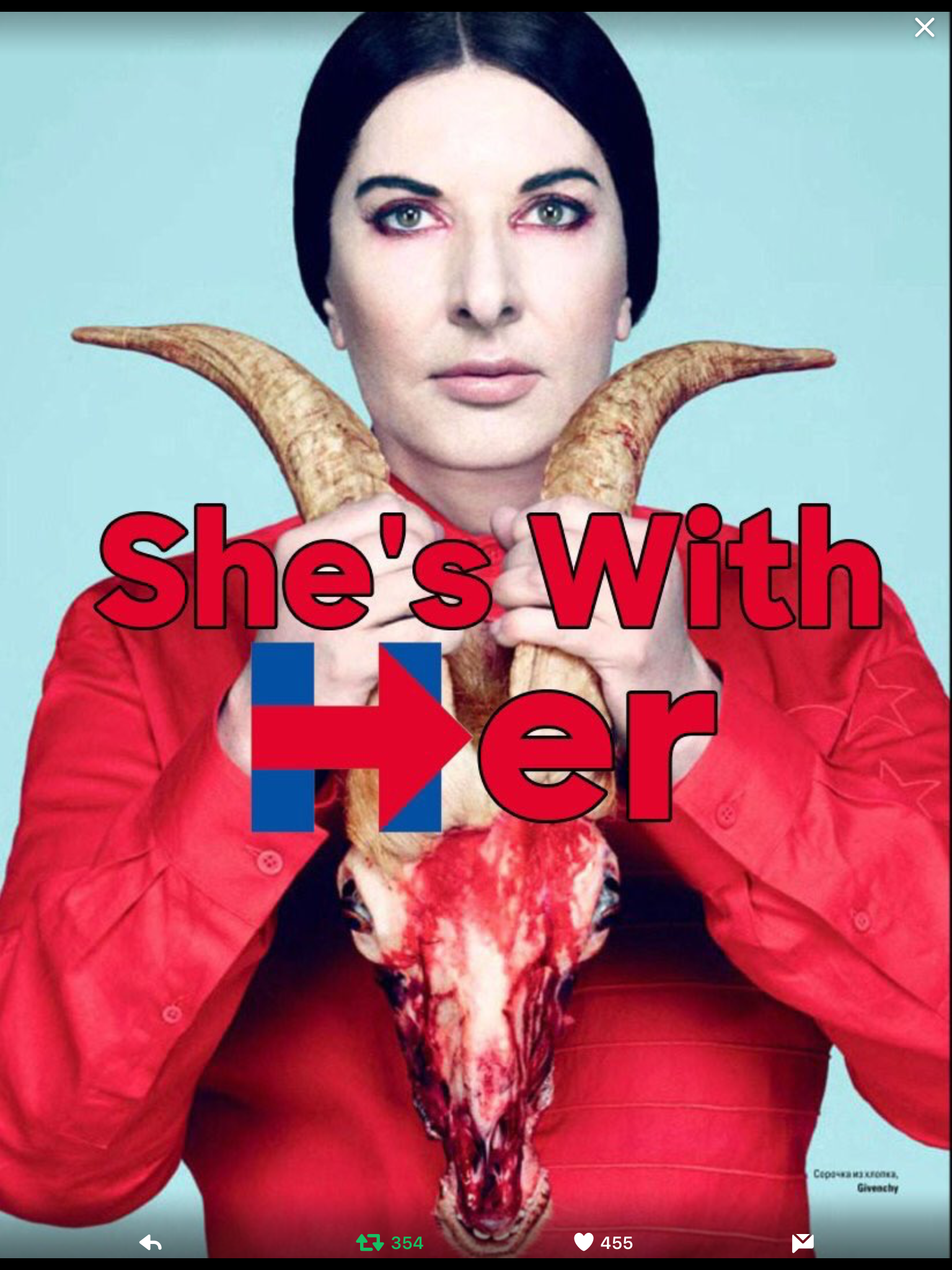


 b>HOT LINK came out NOVEMBER 1. 2016. 4 minutes STEVE PIECZENIK calls himself “gatekeeper of ‘the second revolution'” plausible *******
It is now five days after the election. My question about the riots is why they did not begin on election night it was clear by midnight in NYC the Trump was ahead and the Dow Futures had dropped 400 and in steps down 700 before leveling out.


Looks like the Saudis are not doing well when the pay to play flopped …Chapter 11 2020
And what of Hillary? where is her voice to still the crowds shedding blood and tears in her name?
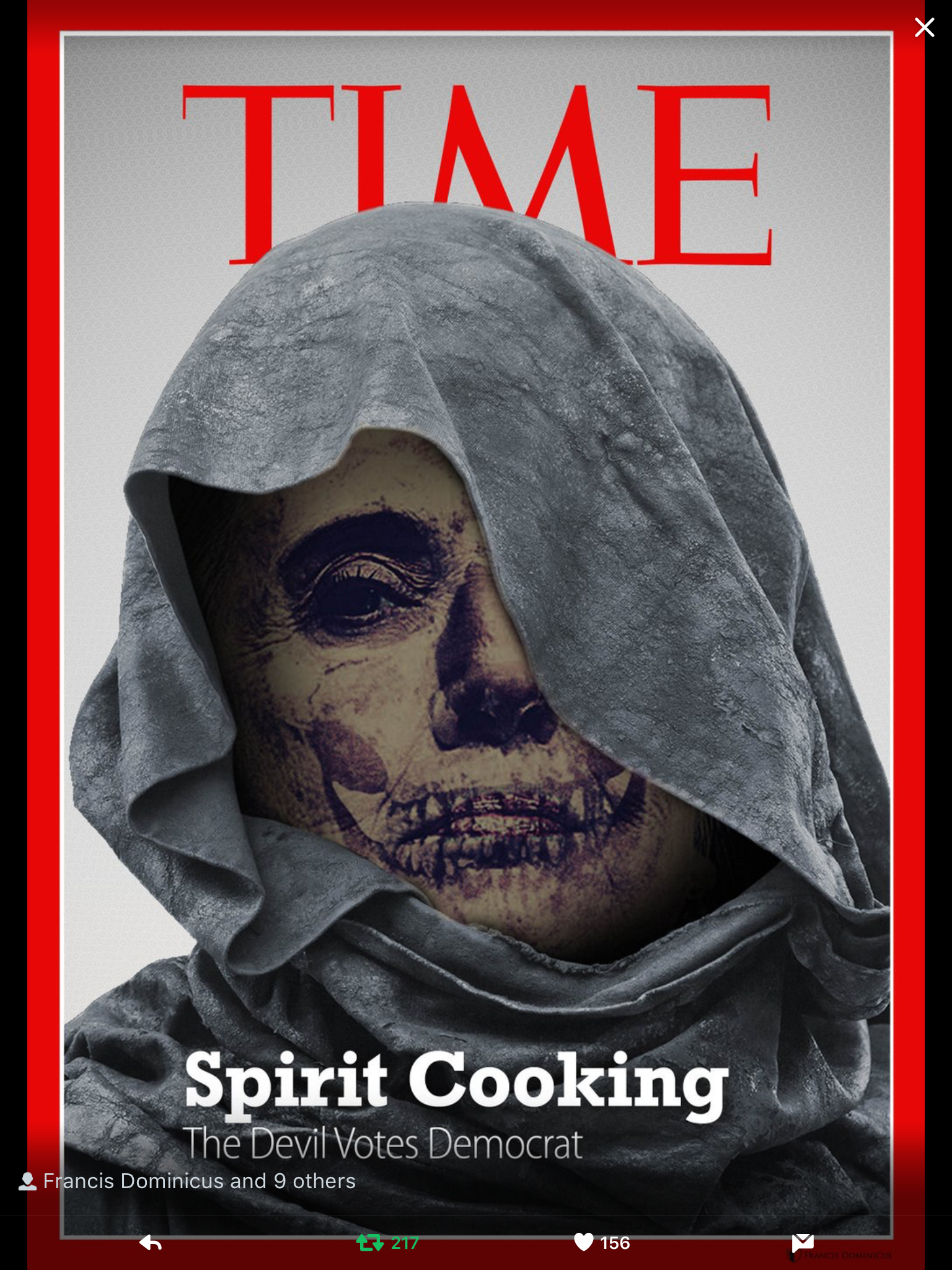 Day6 after elections. WTF?


I, too remain Deplorably Yours.
© Diane E. Dreyfus [2008-2017] and © Dragoness' Utterances, [2008-2017] Unauthorized use and/or duplication of this material without express and written permission from this site’s author and/or owner is strictly prohibited.Such photos, excerpts and links, as have been expressly permitted, may only be used, provided they contain full and clear credit is given to © Diane E. Dreyfus [2008-2017] and © Dragoness' Utterances, [2008-2017] with appropriate and specific direction to the original content.
In spite of their challenging terrain and vastness of their reach, the varieties in their languages and the serial interventions of conquistadors and modern opportunists, the Mayans keep their spirit, arts of fabric and design enriched and undiluted.


At the time of the conquest. Nahuatl was spoken by Toltecs as far away as Yucatan and by Maya in the present day Quiche District of Guatemalan highlands. The words must have eased trading and, eventually might have brought the loose alliances of MesoAmerica into a working unit– But, Nahuatl was too “foreign” to be used for local affairs and since there was no common currency –except, maybe, the Cocoa bean, even if it were desired, overt unification would never have been possible .


In spite of their challenging terrain and vastness of their reach, the varieties in their languages and the serial interventions of conquistadors and modern opportunists, the Mayans keep their spirit, producing fiber arts and built design — rich and undiluted.

how nice it is to work with la Señora de Cancuén —
These beaded cuffs look precious and you can wear them everywhere.. 


The study is set to begin in two weeks pending final IRB board approval. Afterwards, the protocol could be made readily available in underserved areas where access to conventional treatment is unavailable or unaffordable. It could also be used in cases where the conventional treatment is contra-indicated or has unacceptable side effects. Joan has already given instruction in auricular acupuncture to more than 90 Guatemalan midwives, community health promoters and students. Acupuncture has been well accepted and popular in the community. Her work is supported in part by the Integrated Health Project.
04APR15
Panajachel, Guatemala
A New York based Acupuncturist is doing a Clinical Trial on Reducing Blood Glucose in Patients with Type Two Diabetes
This is the first time an auricular (ear) acupuncture protocol is being tested for this outside of China.
Joan Boccino, L.Ac. a doctoral candidate in Acupuncture and Oriental Medicine, is trying to determine if ten small needles inserted in both ears have any effect on blood glucose levels . The “ear only” or auricular point combination she will use is derived from published literature and a survey of practitioners in the field. It is similar to another ear protocol known as the “NADA Protocol.” That combination was originally developed in the context of drug detoxification treatment in the 1970’s. However, it proved so effective that it’s use has expanded for use in general wellness and stress reduction including PTSD. In the US it is used in private practices, community settings, hospitals and by the US military.
Joan developed #BoccinoProtocol with NADA in mind as the NADA protocol has historically been taught to community members who are not “medically trained” in addition to those within the healthcare field.

Dr. BOccino knows the immediate need for pragmatic intervention in diabetes since she has been working in the Mayan Highlands since 2011. In 2012 colleagues and senior students from the Pacific College of Oriental Medicine joined Professor Boccino in founding a mission that is still on-going at the Barbara Ford Center for Peace in Quiche. Last year, she brought a successful Traditional Chinese Medicine Jornada to the District of Solola.
This year, her study is being coordinated with the assistance of The Diabetes Club which will provide patients and office space for the research in Panajachel. The study’s criteria calls for patients with a history of blood glucose levels above +125 They also must have the ability to test blood glucose levels — two times a day for four consecutive weeks. Twenty participants will all be issued meters, materials and given instructions for recording their data prior, during and after the study. During the second and third weeks of the study they will receive the acupuncture treatment.
If this study is successful Joan can seek alliances with the Guatemalan government and educational institutions to discuss running a larger study. If results of that larger study are also successful, Joan can work with the appropriate agencies to develop a curricula of certification (and professional acknowledgement) for practitioners trained in this protocol.
The study is set to begin in April pending final IRB board approval. Afterwards, the protocol could be made readily available in underserved areas where access to conventional treatment is unavailable or unaffordable. It could also be used in cases where the conventional treatment is contra-indicated or has unacceptable side effects. Joan has already given instruction in auricular acupuncture to more than 90 Guatemalan midwives, community health promoters and students. Acupuncture has been well accepted and popular in the community. Her work is supported in part by the Integrated Health Project.
It is amazing to me that there is no part of the STATE Department that monitors international NGO’s. Nor does anyone push me in the direction of the IRS to report the financial mistatements..
Is my perception correct when I assume that there is no entity that actually monitors International Charities..?
This lack goes a long way towards explaining how wild FTC is in Guatemala.
This is a follow up on a 02FEB15 Letter regarding Feed the Children’s Abuses in Guatemala..
The Exceedingly Bad News is that there is no process to redress under-reporting aid, abuse of host populations nor mismanagement and internal theft. When you think about it it makes sense..The damaged parties are not US citizens, any damage or theft (IF proven) would be difficult to collect on or recoup. Very low ROI, full stop.
In any case, here’s the chain. From Embassy to independent Watchdog organizations
Forwarded 04FEB15 Letter to R.E.Barney at US Embassy in Guatemala
Dear Rob,
Thanks for taking my call. What I am looking for, in contacting the Embassy, is guidance on where to route my specific complaint. I know that these abuses of low pay and short rations are widespread in Guatemala and I am hoping to trigger an audit of the NGO either in country or in the USA.
Below is my letter to CharityWatch.org.. What I am pointing out is that although FTC had every legal opportunity to redress Ms. Garcia-Gracia’s complaint they chose a end around legal process and turned custody of Donor Goods over to neighbor lady..This was devisive, at least. But I believe that turning Donor Goods over to a “unconstituted” party is perhaps an infraction –sufficient to draw fire.
Their internal figure for rations for each child is 15Q
and they regularly pay less than minimum Guatemalan Wage…
Please let me know if there are ways to route this.
Thanks ,
dd
________
Ms. Dreyfus,
I’m sorry I was not able to get back with you as I had hoped yesterday. I ended up having to leave the office to assist with a case. As far as I’ve been able to determine you have a couple of options. A local option is to file a complaint with the Ministry of Labor here regarding their labor practices. Another option, from the US side, is you could write a letter to your congressman or one of you senator asking them to look into the matter, as it appears to be a US based organization.
If you would like a contact with the Ministry of Labor, let me know and I’ll ask my colleagues who you might be able to go to.
Thanks again for your inquiry.
Rob Barney
American Citizen Services
US Embassy – Guatemala
Thanks for your reply, Rob.
Rosa already has a Guatemalan lawyer pursuing the Labor violations. As I reported, the litigation has been going on for almost two years
But, I am, frankly, shocked at the lack of oversight that the USA has over foreign NGOs.
How is it that little 501-c-3s are always nervous that their charter can be yanked for being “too political” while the Feed the Children cowboys ride free??? literally raping and plundering????
I told you that I could prove systematic fiscal abuses and you’re telling me that my only option is to write to my congressman, Hon. Sheldon Silver, who is himself under investigation?
I am sorry I am entirely dumbstruck by this reply.
Can you, please, confirm your advice to me that reporting to my LOCAL rep – not even the Oklahoma (home) state representative of the perpetrating NGO — is ALL the and the ONLY advice that the US Embassy provides to citizens for reporting tax fraud in an International NGO like Feed the Children?
Said differently, I am asking if your response —as exceedingly limited as it appears — is the Best Practice for US citizens to invite institutional oversight for multimillion dollar NGOS.
What I am really asking is if it is true that the US Department of State is silent/ignorant in such matters?
Many thanks,
D
From: Lindsey Struck (Support staff Charity Navigator)
Dear Diane,
Thank you for writing to Charity Navigator and I’m sorry to hear about what
sounds like an exceedingly frustrating set of circumstances. I am the
analyst responsible for Feed the Children’s evaluation on our site. We have
a designation called a Donor Advisory (explained here on our site
<http://www.charitynavigator.org/index.cfm?bay=content.view&cpid=1072>) if
this information has also been reported about in a reputable news source.
Alternatively, we suggest you contact the Attorney General’s office in
Oklahoma, the state in which the charity is registered. This may be a good
first step, particularly if you have evidence of theft and sexual
misconduct in their field offices.
Thank you for your commitment to responsible philanthropy,
Lindsey Struck, MA
Program Analyst
P: 201.818.1288 x123
lstruck@charitynavigator.org
______________________________
C H A R I T Y N A V I G A T O R
America’s Largest Charity Evaluator
http://www.charitynavigator.org
http://blog.charitynavigator.org
http://twitter.com/charitynav
________________________
Hi Lindsay,
I wrote to the US Embassy and they told me to write to my (under invistigation, himself) congressman.
It is amazing to me that there is no part of the STATE Department that monitors international NGO’s. Nor does anyone push me in the direction of the IRS to report the financial mistatements..
Is my perception correct when I assume that there is no entity that actually monitors International Charities..?
This lack goes a long way towards explaining how wild FTC is in Guatemala.
Thanks,
dd


 dragoness' utterances
